Exercisers are usually divided into two groups. Those who hate leg exercises and those who look forward to it all week.
The fact is that this part of the training is often tiring, but it is also extremely important, not only for a better appearance of the lower body and tighter legs, but also because strong leg muscles are extremely important for overall health. Certain scientific studies have proven that regular squatting, as part of a healthy lifestyle, leads to improved heart health and stimulates proper circulation.
Therefore, below we present 20 of the best leg exercises, most of which consist of certain variations of squats.
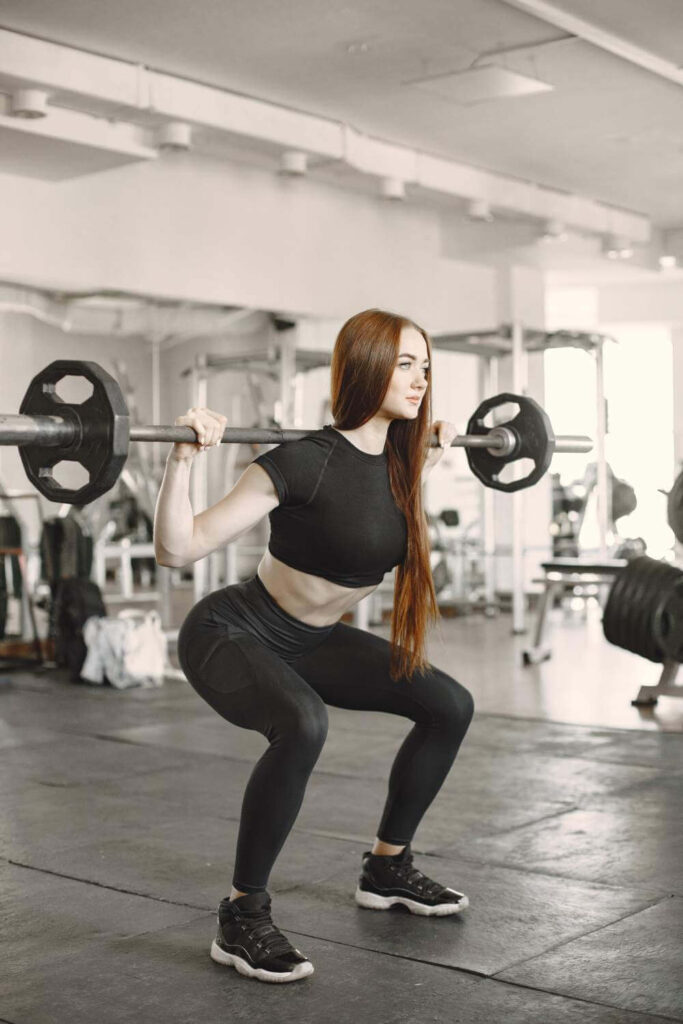
Back Squat
This is the most common exercise for legs, and also one of the most effective ones. The bar is placed on the upper part of the back (trapezius). The focus is on pushing from the whole foot and maintaining a straight back. This is the primary exercise for developing the strength of the entire lower body.
Front Squat
Here, the weight is held in front of the body instead of the upper back. Put the bar on the front of the shoulders and slowly start doing squats. This position puts more strain on the quadriceps and requires the upper back to remain completely upright.
Goblet Squat
This is a really popular and fun squat variation. A weight or kettlebell is held with both hands in front of the chest. This variation makes it easier to squat properly and is great for learning proper technique before moving on to the bar.
Hip Thrust
The back rests on the bench, while the bar is pushed with the hips towards the ceiling. This is one of the most effective isolation leg exercises for maximum activation of the gluteal muscles. Want to learn more great gluteus maximus exercises? Read about them in our popular blog.
Glute Bridge
It is performed lying on the floor with bent knees. Lifting the pelvis activates the buttocks with minimal pressure on the lower back. You can try this exercise at home when you have no weights or at the gym as a part of a warmup.
Good mornings
The bar is on the back, and the movement consists of a forward hip bend with the knees slightly bent. The goal is to stretch and strengthen the back and lower back. Primary muscles activated are hamstrings, but lower abs, abs, and lower back are also included in the movement. Discover more of the really effective abs exercises here.
Romanian Deadlift
This leg exercise has hamstrings and glutes as its main target. Here, the weight is lowered to the height of the shins with minimal bending of the knees. The goal is to stretch the back and control the return to the starting position with the power of the legs.
Dumbbell Squat
This squat is performed by holding dumbbells in your hands next to your body. This reduces the strain on the spine that occurs with the bar, and it’s the reason why some people prefer it.
Barbell Lunge
Simply step one foot forward until the back knee almost touches the floor. This leg exercise strengthens stability and balance while hitting the front and back of the leg evenly. It’s made for building your quadriceps.
Barbell Step Up
Stepping onto a stable bench or platform with one leg under a barbell. An exercise is great for developing explosive strength and hip stability, but also for building strong and sculpted quadriceps.
Bulgarian Split Squat
The Bulgarian split squat is one of the most difficult exercises for those who have problems with stability. Here’s how it’s done. The back leg is raised on the bench, while the squat is performed on the front leg. This unilateral exercise eliminates the imbalance in strength between the left and right legs, and your quadriceps are primarily activated while performing it, but also calves, glutes, and hamstrings.
Pulse Back Squat
Pulse back squat is performed like a classic squat, but at the bottom point, you should do a short, controlled up-and-down movement (pulsing). This increases the time under tension for better muscle growth. Targeted muscles in this exercise are the quads, but your calves, lower back, hamstrings, and glutes will also be involved.
Read what the best back exercises are in our other popular blog.
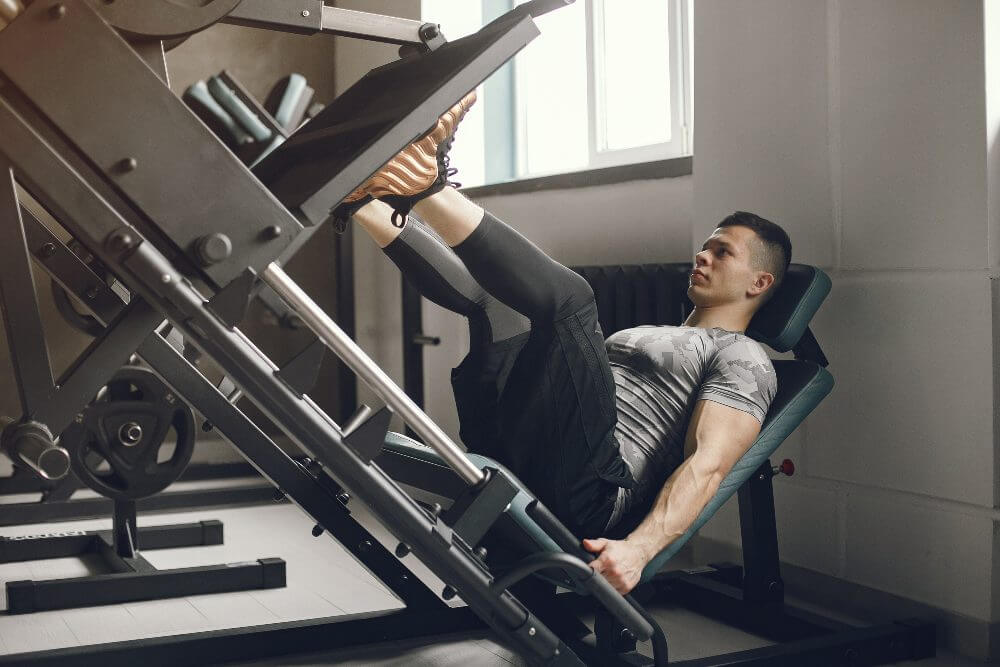
Leg Press
Sitting on the machine, the exerciser pushes the platform with their feet. It allows the safe use of heavy weights because the back is completely supported. Trainers often recommend it to beginners or as one of the last leg exercises in a workout, after the more demanding ones, which include lifting free weights.
Leg Extensions
Seated exercise on the machine where the legs are stretched at the knee. It serves for the precise isolation and definition of the quadriceps muscles. Be sure you adjust the machine to your height before starting it, and don’t overweight it because the leg extension machine is known to put stress on knees if not used correctly.
Seated Machine Calf Press
This is the ultimate machine for calves, and it’s really simple to use, so don’t skip it. By pressing the feet on the platform of the machine, the load is lifted. It primarily affects the deep calf muscle that gives volume to the lower leg.
Glute Kickback Machine
The glute kickback machine isolates the muscles of the buttocks and allows a full range of motion without involving the back. It also involves hamstrings, and it adds resistance to your movements as well as stability.
Machine Hip Abductor
This is a leg extension on a resistance machine. It strengthens the lateral side of the glutes, which contributes to knee stability when walking and running.
Cable Hip Adduction
This exercise requires a Hi-Lo Pulley cable, and it targets glutes and hamstrings, or adductors (inner thighs). You simply pull the leg to the inside of the body with a cable. Adductors are the main muscles for pelvic stability, so it’s recommended for this exercise to be a part of your workout routine.
Cable Hip Extension
Pulling the leg back on the cable from a standing position. It provides constant resistance throughout the movement, which is ideal for shaping the glutes, but it also affects the hamstrings.
Hack Squat
Hack squat is performed on a machine at an angle that naturally fixes your back and minimizes the chances of doing the squat wrong. That’s why it is recommended for exercisers who struggle with form while doing regular squats. The Hack Squat machine focuses the load directly on the quadriceps and reduces the need to balance the load.
Best Leg Workout at the Gym
Here’s our example of effective leg exercises you can do at the gym.
| Exercise | Sets | Reps | Primary Target | Tip |
| Barbell Back Squat | 3–4 | 6–8 | Quads & Glutes | Keep chest up; bar rests on traps. |
| Leg Press | 3 | 10–12 | Quads & Hamstrings | Don’t lock your knees at the top. |
| Romanian Deadlift | 3 | 8–10 | Hamstrings & Glutes | Hinge at the hips; feel the stretch. |
| Leg Extensions | 3 | 12–15 | Quads (Isolation) | Focus on the “squeeze” at the top. |
| Seated Leg Curl | 3 | 12–15 | Hamstrings | Slow and controlled on the way down. |
| Standing Calf Raise | 4 | 15–20 | Calves | Use a full range of motion (deep stretch). |
Best Leg Workout at Home
These are some of the best leg exercises for different muscle groups that you can easily do at home.
| Exercise | Sets | Reps | Primary Target | Home “Equipment” |
| Bodyweight Squat | 4 | 20 | Quads & Glutes | None needed. |
| Bulgarian Split Squat | 3 | 12 (each) | Quads & Balance | Use a couch or chair for the back foot. |
| Glute Bridge | 3 | 15–20 | Glutes | Lie on the floor; lift your hips high. |
| Step-Ups | 3 | 12 (each) | Quads & Heart Rate | Use a sturdy chair or staircase. |
| Side Lunges | 3 | 15 (each) | Inner/Outer Thighs | None needed. |
| Wall Sit | 3 | 45–60 sec | Quads (Endurance) | Any flat wall. |
FAQ about leg exercises
How many times per week should you do leg exercises?
For most people, it’s best to have two to three leg days during the week, but it depends on your fitness goals, muscle groups you put in focus, as well as the free time you’re able to spend on training. Ideally, start with 2 sessions per week, and leave at least 48–72 hours between them. Your muscles need this time to repair and grow.
Later, you can go up to 3 times, but try to vary the focus (e.g., one day focus on Quads, another on Hamstrings/Glutes). Never train legs if they are still really sore from the last session. Recovery is where the actual muscle building happens. Read here how to ease muscle soreness after a workout.
How to be sure you are doing the exercise right?
The best way to learn the proper way of doing every exercise is with the guidance of a professional personal trainer. If you don’t have a coach, try recording yourself. Compare your video to a “perfect form” tutorial on YouTube. Focus on a neutral spine (no rounding) and knee tracking (knees shouldn’t cave inward).
You should feel the burn just in the target muscle. For example, if you’re doing squats but only feel it in your lower back, your form is likely off. Also, if you can’t control the weight on the way down (the eccentric phase), the weight is too heavy, or your technique is lacking.
Machines vs. single weights – what’s better?
Neither is strictly “better,” but they serve different purposes. Machines are great for beginners who have a problem stabilizing their movements while doing a specific squat or some other leg exercise. They are also safer for first-timers in the gym.
Free weights are, however, irreplaceable for building functional strength. You should combine them. For example, start your workout with a heavy free weight movement (like squats) while you have the most energy, and finish with machines (leg press or extensions).
Should you do cardio before leg day?
It depends on your goal, but generally: No, not intense cardio. A light warm-up like walking or cycling is recommended, but don’t do it for longer than 10 minutes to keep your legs rested for weight training.