Terms abs and core are also used as synonyms while talking about fitness, but the fact is that your abs and your core are not the same. Abs (specifically the rectus abdominis) are the visible muscles in the front that create a six-pack and are just a small part of the core.
Your core is a complex 360-degree system of muscles. It contains obliques, lower back, diaphragm, and deep transverse abdominis.
A strong core is, first of all, important for stability and posture, but if your goal is to have nicely defined abs, it’s also recommended to do a combination of isolation ab workouts and functional core exercises. Here are the 30 best ab exercises, some of them for core, and some that target just abs and can eventually lead to the 6-pack you’ve always wanted.
Group 1: The Fundamental Ab Exercises
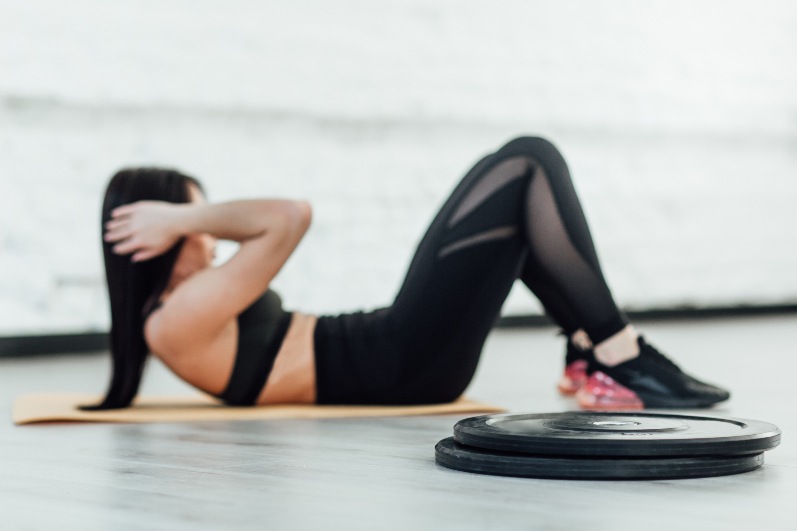
1. Crunches
The crunch exercise is the most recognized movement for isolating the rectus abdominis. It is different from a full sit-up. Crunch requires a smaller range of motion that focuses specifically on spinal flexion. By curling the upper torso toward the hips, you create maximum peak contraction in the upper abdominal wall. It’s a necessary part of every workout for muscle definition.
2. Bicycle Crunches
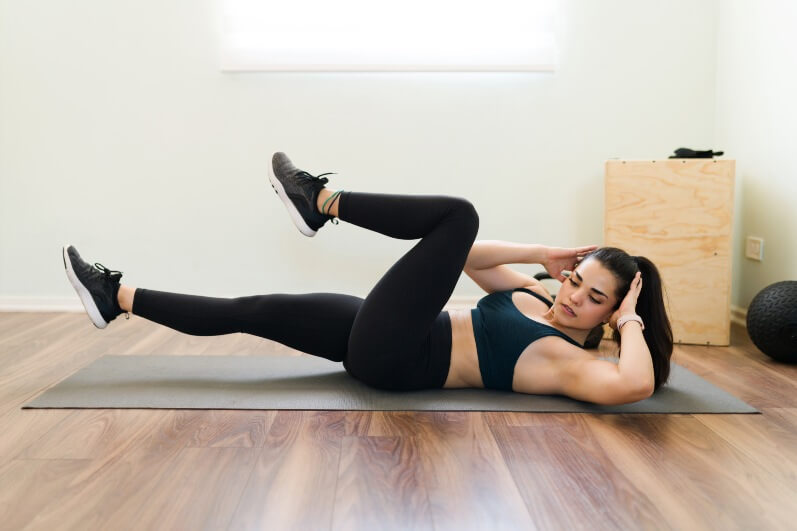
We’re sorry, but this ab exercise does not include actual bicycles, although it’s equally useful for gaining strength and muscle toning. It’s frequently cited as one of the most beneficial ab exercises.
Its rotational element engages the entire midsection and targets the frontal abs while simultaneously activating the internal and external obliques through a cross-body motion. Because it requires coordinated movement of both the upper and lower body, it is an efficient way to increase the intensity of ab workout exercises without needing extra weight.
3. Leg Raises
The leg raise exercise is a fundamental movement for targeting the lower region of the abdominal wall. By lifting the weight of the legs from a supine position, you place a significant load on the lower fibers of the abs.
This exercise is considered to be the best lower ab exercise, as it requires the muscles to work against gravity to stabilize the pelvis while the legs move through a full range of motion. If you don’t have much time but want to do at least some kind of abs workout at home, this exercise should be part of your program.
4. Reverse Crunch
The reverse crunch exercise is, just like its name suggests, a reversed crunch exercise for the abs, where we move the lower body toward the upper body. By curling the hips off the floor and bringing the knees toward the chest, you shift the primary tension to the lower portion of the rectus abdominis. It helps develop the strength needed for more advanced hanging movements while protecting the lower back.
5. The Classic Plank
While it involves no movement, the plank is known as the king of all ab exercises. We can say that it is a gold standard for isometric core stability. Rigid, straight-line plank position forces the entire abs and core complex to work together while trying to resist gravity. This exercise builds the foundational strength necessary for heavy lifting and better posture, making it a mandatory component of any best ab training program.
Group 2: The Lower Ab Specialists
6. Elbow to Knee Crunch
This is a really effective bodyweight ab exercise that has abdominals and obliques as primary goals. Simply bring the opposite elbow and knee together while lying on your back on a flat surface. This movement has a more intensive impact on your abs than a regular crunch.
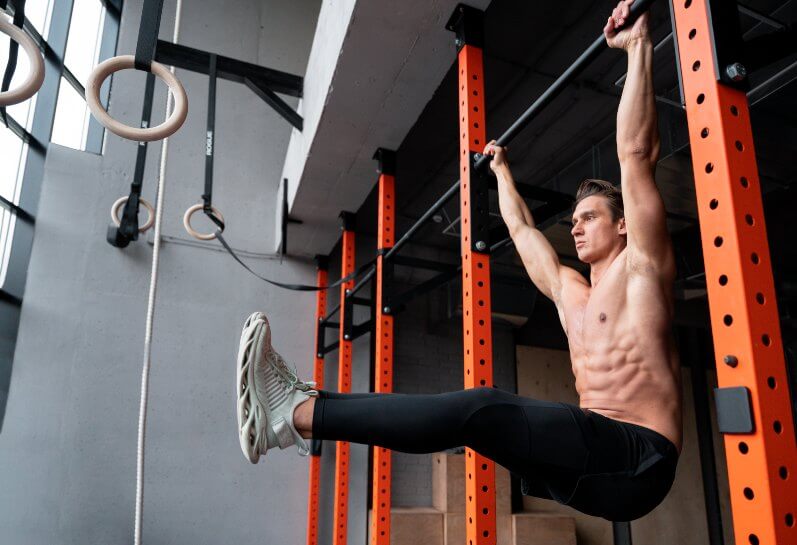
7. Hanging Leg Raise
Performed on a pull-up bar or a captain’s chair gym station, the hanging leg raise is one of the most demanding abs exercises at the gym. Unlike floor-based moves, the hanging position requires the upper body to remain stable while the lower abs work to lift the entire weight of the legs. This movement is very effective for developing deep lower-midsection strength and improving overall “hanging ab” definition.
8. Vertical Knee Raise
The vertical knee raise is a powerhouse movement for developing the lower abdominal region. Typically performed on a “power tower” or a dedicated gym station, this exercise requires you to support your body weight on your forearms while driving your knees toward your chest.
Because the back is supported against a pad, it minimizes the use of momentum, ensuring that the abdominal muscle workout is focused entirely on the trunk. This lower ab exercise is considered to be one of the best for building core compression strength and gaining visible definition in the lower midsection. For this exercise, it’s important to have strong arms as well. See the best tricep exercises in our blog.
9. Captain’s Chair Knee Raise
The captain’s chair is a specialized piece of abs workout gym equipment for back support while doing exercises such as leg raise and knee raise. By supporting your weight on your forearms and driving your knees toward your chest, you will eliminate momentum and force the lower abs to do the work. This is often preferred over hanging raises for beginners because it provides better spinal support and stability.
10. Mountain Climbers
Mountain climbers are dynamic ab exercises that mix cardio workout and lower ab engagement. How is it done? While holding a plank position, driving the knees toward the chest in quick succession forces the lower abdominals to contract rapidly to stabilize the hips. This is an excellent choice for fat-burning exercises because it raises the heart rate while strengthening the core.
11. Scissor Kicks
Scissor kicks are a high-tension lower abdominal abs exercise that involves small, rapid alternating movements of the legs just a few inches off the floor. This sustained “time under tension” is grueling for the lower abs and the transverse abs.
It is an ideal ab exercise for the end of a training because it forces the muscles to remain engaged without a rest period between reps.
12. Lower Ab Workouts with Dumbbells
Adding a light dumbbell between the feet during leg lifts or reverse crunches transforms a standard move into a weighted ab exercise. This added resistance is made for those who have moved past bodyweight training and want to build thicker, more prominent muscle bellies. Using ab workouts with weights ensures that the muscles continue to adapt and grow through progressive overload.
13. Russian Twists
The Russian twist is one of the best abs exercises for side muscles. It targets the internal and external obliques thanks to torso rotation. While sitting on the floor with your feet elevated and rotating a weight from side to side, you force the lateral muscles of the abdomen to stabilize the spine against the shifting load. If you need to improve rotational power or want a “side ab” definition, this exercise is strongly recommended.
14. Standing Oblique Crunch
The standing oblique crunch presents a functional alternative to exercises on the floor. It is ideal for those who prefer standing ab exercises. By crunching the elbow down toward the hip while standing, you isolate the side of the abdominal wall without placing stress on the lower back. This movement is especially effective for tightening the waistline, but improving lateral stability as well.
15. Side Plank
Unlike a standard plank, the side plank shifts the entire load to the lateral chain. It’s a very useful core exercise for strengthening the obliques and the quadratus lumborum (a deep lower back muscle). It is often cited as a top core workout because it builds the endurance necessary to maintain a tall, upright posture and protect the spine from lateral shearing forces.
16. Cable Woodchoppers
Cable woodchoppers are one of the best ab cable exercises for athletes. By pulling a cable diagonally across the body, you mimic the rotational mechanics used in swinging a bat or golf club. This move provides constant tension throughout the entire range of motion, making it superior to many bodyweight oblique crunches.
17. Windshield Wipers
The windshield wiper workout is an advanced movement typically performed hanging from a bar or lying on the floor. By rotating the legs from side to side in a wide arc, you engage the obliques to control the weight of the lower body. This is a high-level abdominal training move that requires significant strength in both the visible abs and the deep transverse abdominal muscle.
18. Side Crunch
The side crunch exercise is a focused isolation move performed while lying on your side. By shortening the distance between the ribcage and the hip bone, you create a deep contraction in the oblique fibers. It is a staple in ab exercises for women and men aiming to highlight the “serratus” muscles and the lines along the side of the stomach.
Group 4: Gym & Machine Power (Weighted Resistance)
19. Ab Crunch Machine
The ab crunch machine is a staple in most commercial gyms because it allows for easy weight adjustments. By using a seated ab crunch machine, you can apply progressive overload to the rectus abdominis, which is the fastest way to build the “blocks” of a six-pack. It is a safer alternative for those who find floor crunches uncomfortable for their neck or back.
20. Cable Kneeling Crunch
The cable kneeling crunch (or rope crunch) is a favorite among bodybuilders. This ab cable workout allows you to “crunch” against a high amount of weight while keeping the hips stationary. It is highly effective for isolating the upper abs and can be easily modified to target the obliques by twisting slightly toward each knee.
21. Ab Coaster
The ab coaster machine utilizes a “bottom-up” movement, where your knees are pulled toward your chest along a curved track. This design targets the lower ab workouts specifically while removing the strain usually felt in the hip flexors during leg raises. It is one of the most popular pieces of abs workout gym equipment for its ease of use and effectiveness.
22. Weighted Decline Sit-Up
Performed on a crunch bench set to a downward angle, the weighted decline sit-up increases the range of motion and the intensity of a standard sit-up. Holding a plate or dumbbell against your chest makes this a powerful ab workout with weights that target the entire abdominal wall from top to bottom. It can be done at home, too. If you’re missing weights, try with a large bottle of water.
23. Ab Roller Wheel
The ab roller wheel is a simple but brutal piece of ab workout equipment. Rolling the wheel forward forces the core to act as a bridge, preventing the back from arching. This “anti-extension” work is one of the most effective ab exercises for building a rock-solid midsection and deep core strength simultaneously.
Don’t forget to find out all about the best bicep exercises.
24. Roman Chair Leg Raise
The Roman chair leg raise is a gym classic for targeting the lower stomach. By bracing your back against the pad and supporting your weight on your elbows, you can perform leg or knee lifts with perfect form. This machine is essential for lower abdominal exercises because it forces the abs to work without the assistance of momentum.
Group 5: Stability & Deep Core (Functional Strength)
25. Dead Bug
The dead bug is a fundamental core stability exercise that teaches you how to move your limbs while keeping your spine braced and neutral. By lying on your back and alternating the extension of the opposite arm and leg, you force the transverse abdominal muscle to prevent the lower back from arching. It is a highly recommended beginner core workout because it builds a safe foundation for more intense lifting.
26. Bird-Dog
Similar to the dead bug but performed on all fours, the bird-dog targets the “posterior chain” and the deep stabilizers of the spine. Extending one arm and the opposite leg simultaneously requires balance and total core engagement. This move is essential for core strengthening and is frequently used in physical therapy to alleviate lower back pain by strengthening the muscles surrounding the vertebrae.
27. Pallof Press
The Pallof press is a premier “anti-rotation” movement typically performed using a cable machine or resistance band. By holding a cable at chest height and pressing it straight out in front of you, you must engage your entire core to resist the machine pulling you to the side. It is one of the best exercises for core strength because it trains the midsection to remain rigid under external pressure.
28. Hollow Body Hold
Borrowed from gymnastics, the hollow body hold is an isometric abs and core workout that requires you to press your lower back into the floor while hovering your arms and legs just above the ground. This creates a “dish” shape that places immense tension on the rectus abdominis and deep core. It is a cornerstone of advanced ab training due to the high level of muscular endurance it requires.
29. Bear Crawl
The bear crawl is a dynamic core body workout that engages the abs, shoulders, and quads. By moving forward on hands and toes while keeping the knees just an inch off the ground, you force the core to stabilize the torso against constant movement. This is a great functional core workout at home because it will improve coordination and total-body stability without the need for any equipment.
30. Forward Stability Ball Plank
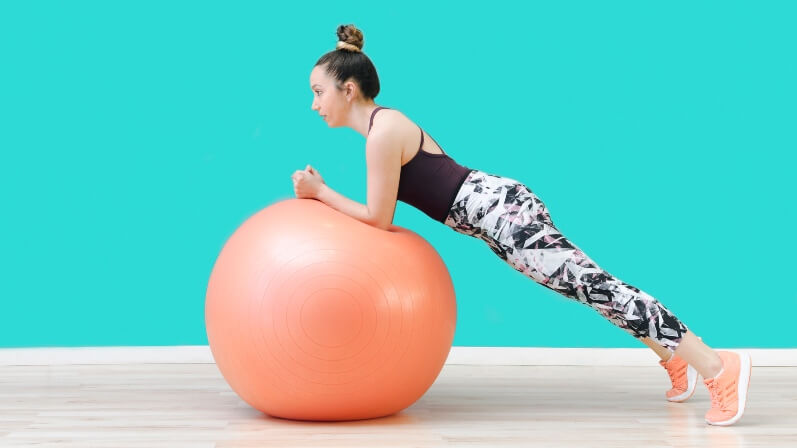
Performed by placing your forearms on a stability ball in a plank position and moving them in a circular motion, “Stir the Pot” is an elite-level core strength workout. The unpredictable surface of the ball forces every minor stabilizer muscle in the trunk to fire. It is often cited as one of the most effective stomach exercises for building a midsection that is as strong as it is defined.
Abs Workout at the Gym
Here’s one example of how your training for abs should look at the gym. Of course, not all gyms have all the equipment, and also not everyone is in the same physical condition, so we suggest hiring a professional personal trainer for help and achieving optimal results.
| Exercise | Sets | Reps | Rest |
| Hanging Leg Raises | 3 | 10–12 | 60 sec |
| Cable Kneeling Crunches | 3 | 12–15 | 60 sec |
| Ab Coaster or Ab Machine | 3 | 15 | 45 sec |
| Pallof Press | 3 | 12 per side | 45 sec |
| Stir the Pot (Stability Ball) | 3 | 10 circles each way | 60 sec |
Abs Workout at Home
If you don’t have much time or find it easier to work out at home, on your own, or with the assistance of a personal trainer, here’s an example of an effective abs workout without all the fancy gym machines.
| Exercise | Sets | Reps / Time | Rest |
| Bicycle Crunches | 3 | 20 reps (10 per side) | 30 sec |
| Dead Bug | 3 | 12 reps (slow & controlled) | 30 sec |
| Mountain Climbers | 3 | 45 seconds | 30 sec |
| Lying Leg Raises | 3 | 12–15 reps | 30 sec |
| The Classic Plank | 3 | Hold for 45–60 seconds | 45 sec |
The FAQ about abs exercises
What are the best exercises for belly fat loss?
Spot reduction is a myth, and it’s important to have a holistic approach to core workouts. While stomach fat-reducing exercises strengthen the muscle, you also need a caloric deficit and cardio to reveal the abs and get in shape.
Are lower ab exercises different from upper ab exercises?
The rectus abdominis is one long muscle, and each exercise impacts it, but there are movements like reverse crunches and leg raises that put more tension on the lower portion of that muscle fiber.
Here is the translation of your FAQ into English, keeping the professional and precise tone of your blog:
Are “six-pack” abs proof of a strong core?
Not necessarily. Visible abs are primarily the result of a low body fat percentage and hypertrophy of the rectus abdominis muscle. It is possible to have visible abs while still having a weak core that fails to provide adequate spinal stability. A well-rounded training focus should balance aesthetics with functional core strength.
Why does my lower back hurt while doing ab exercises?
Back pain during exercises like leg raises usually occurs when the abdominals fatigue, causing the lower back to take over the load. This often happens because the deep core muscles, such as the transverse abdominis, are not sufficiently activated to keep the pelvis in a neutral position. Always focus on keeping your lower back “glued” to the floor during these movements.
What is the difference between ab exercises and core exercises?
Ab exercises (like crunches and twists) usually involve intentional spinal flexion or rotation to target a specific muscle. Core exercises (like planks or “Stir the Pot”) are often static or “anti-rotational”. Their goal is to teach your body how to resist movement, which protects the spine and transfers power between the upper and lower body.
How often should I train my abs?
Although the core muscles are durable because they support us all day, they still need recovery time to grow. For the best results, aim for 3 to 4 specific sessions per week. Instead of doing endless repetitions of basic crunches, combine them with some more challenging exercises with lower rep ranges (8–15) and stimulate muscle growth.
Can I train my abs only at home?
The good news is that the best ab exercises, such as planks, dead bugs, and leg raises, require no equipment at all. You can easily do them anywhere, including your home. However, tools like an ab roller or a medicine ball can significantly speed up your progress, so think about investing in them if you’re planning on working out at home. Extra resistance makes muscles work harder, and you can achieve better and faster results than with bodyweight alone.