The Mediterranean diet is one of the healthiest and most delicious diets. We could even say it’s not a diet but a lifestyle. It’s pretty easy to follow its rules because it’s based on olive oil, veggies, and whole grains, and it reminds us of a long sunny summer day of a vacation in Italy or Greece, and enjoying fresh local products.
Of the 5 blue zones, places known for their exceptional longevity (100+ years), two are located in the Mediterranean. One is Sardinia, and the other is Ikaria. We are pretty sure that the Mediterranean diet has a big influence on this.
Based on olive oil, fresh vegetables, fruit, fish, seafood, whole grains, and meat consumed less frequently, this way of eating is often linked to the longer and healthier lives of people living in Mediterranean regions. Some studies found connections between longevity and this way of eating, and in this article, we’ll explore different ways of the Mediterranean diet supporting overall health. Read it to find out why these nutrient-rich foods should become part of your everyday eating routine.
Is the Mediterranean diet really responsible for a longer lifespan?
As mentioned earlier, the Mediterranean diet is based on fruits, vegetables, whole grains, olive oil, fish, and seafood. Red meat and sweets are consumed only occasionally or not at all, and that’s why the Mediterranean diet is similar to an anti-inflammatory diet.
This eating pattern, typical of countries like Greece, Italy, and Spain, has been associated with a wide range of health benefits for a long time. Some of them are at a lower risk of chronic diseases such as heart disease, diabetes, and certain types of cancer.
Research suggests that following a Mediterranean-style diet may significantly contribute to a longer lifespan. One large study that included data from 130 countries found a positive link between adherence to the Mediterranean diet and increased life expectancy, as well as a longer period of life spent free from serious not only physical, but also mental illnesses.
The main beneficial components of the Mediterranean diet are antioxidants, phytochemicals, and omega-3 fatty acids. All of them are important for improving overall health and boosting your immune system.
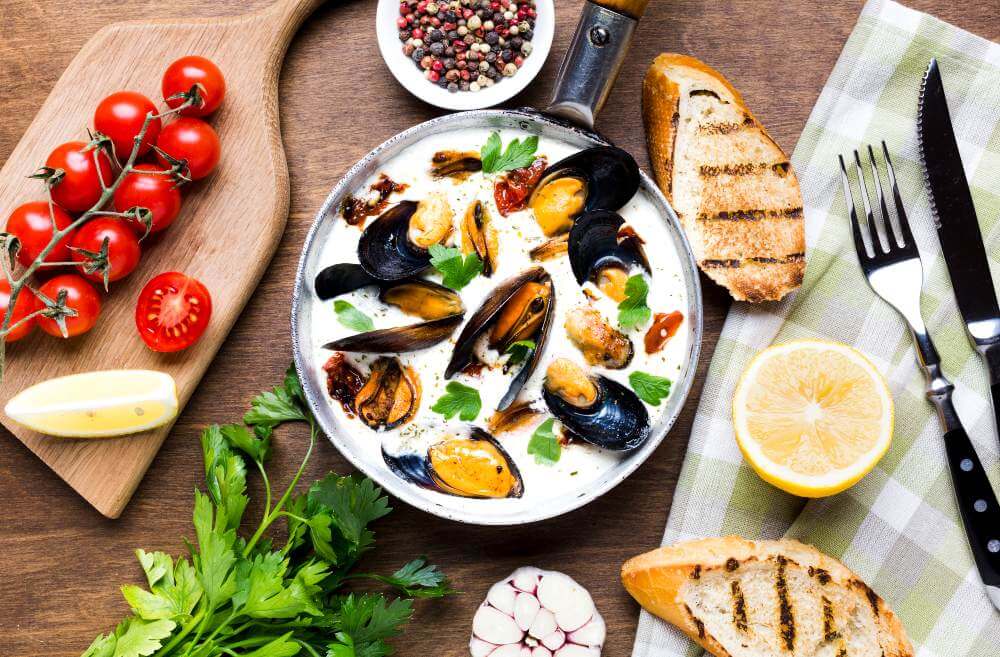
Mediterranean Diet Food List
Here’s the list of ingredients recommended for a Mediterranean diet, divided by type. You can easily incorporate them into your Mediterranean meals:
| Vegetables | Fruits | Nuts and seeds | Grains | Meat (a few times per week) |
| Tomatoes | Apples | Almonds | Whole wheat | Fish |
| Cherry tomatoes | Pears | Walnuts | Whole-grain bread | Seafood |
| Bell peppers (red, yellow, green) | Oranges | Hazelnuts | Whole-grain pasta | Chicken |
| Eggplant | Mandarins | Pistachios | Brown rice | Turkey |
| Zucchini | Clementines | Cashews | Wild rice | Rabbit |
| Cucumbers | Lemons | Brazil nuts | Barley | |
| Onions | Grapefruit | Pine nuts | Oats | |
| Garlic | Figs | Peanuts | Farro | |
| Leeks | Dates (in moderation because of a high sugar concentration) | Chia seeds | Bulgur | |
| Spring onions | Grapes | Flaxseeds | Couscous (whole wheat) | |
| Artichokes | Cherries | Pumpkin seeds | Quinoa | |
| Broccoli | Peaches | Sunflower seeds | Millet | |
| Cauliflower | Nectarines | Sesame seeds | Polenta | |
| Cabbage (white, red) | Apricots | Hemp seeds | Rye | |
| Savoy cabbage | Plums | Spelt | ||
| Kale | Pomegranates | |||
| Spinach | Strawberries | |||
| Swiss chard | Raspberries | |||
| Arugula (rocket) | Blueberries | |||
| Lettuce (romaine, butterhead) | Blackberries | |||
| Radishes | Watermelon | |||
| Carrots | Melon (cantaloupe, honeydew) | |||
| Beets | ||||
| Celery | ||||
| Fennel | ||||
| Green beans | ||||
| Peas | ||||
| Asparagus | ||||
| Okra | ||||
| Potatoes (white, red, sweet – in moderation) | ||||
| Turnips | ||||
| Parsnips | ||||
| Mushrooms | ||||
| Pumpkin | ||||
| Butternut squash |
What fat is preferred for food preparation in a Mediterranean diet
Olive Oil. Other plant fats and vegetable oils are not recommended. Always choose an extra virgin and look for a recent harvest date. It should be kept in a dark glass or metal tin and away from sources of light and heat.
How often can I eat meat while on a Mediterranean diet?
A few times a week is more than enough. Fish, seafood, poultry (chicken, turkey, rabbit), lean white meat, should be prepared skinless if possible, but don’t eat them every day.
And if you feel the need to eat red meat or it is recommended to you by doctors, for example, in order to improve blood work and avoid anemia, do it two or three times per month. Take a look at a Carnivore diet as well and learn all about it.
Mediterranean diet and foods to avoid while on it
Added sugar is one of the most common hidden troublemakers in modern diets. It’s especially present in soda, candies, ice cream, syrups, baked goods, and even plain table sugar, and regular intake can disrupt blood sugar balance, increase inflammation, and fuel constant cravings.
Refined grains come next. By refined grains, we think of white bread, tortillas, crackers, chips, and yes, even pasta. Although Italy is known for it, pasta is unfortunately not a part of the Mediterranean diet. Why? Because our goal is to avoid foods that are quickly digested, low in fiber, and far less satisfying than their whole-grain versions.
Trans fats are next. The worst kind is cooking margarines, but even Soybean Oil, cottonseed oil, corn oil, and palm oil, often found in fried foods, can be harmful for heart health if consumed every day for a long period of time.
Processed meats such as sausages, hot dogs, deli meats, and beef jerky are another group to limit, as they are typically high in salt, preservatives, and compounds linked to chronic inflammation.
Finally, highly processed foods like fast food, ready-made convenience meals, microwave popcorn, and many granola bars may look practical, but they are full of dangerous additives. They contain poor-quality fats and hidden sugars that are definitely not a part of the Mediterranean diet and lifestyle.
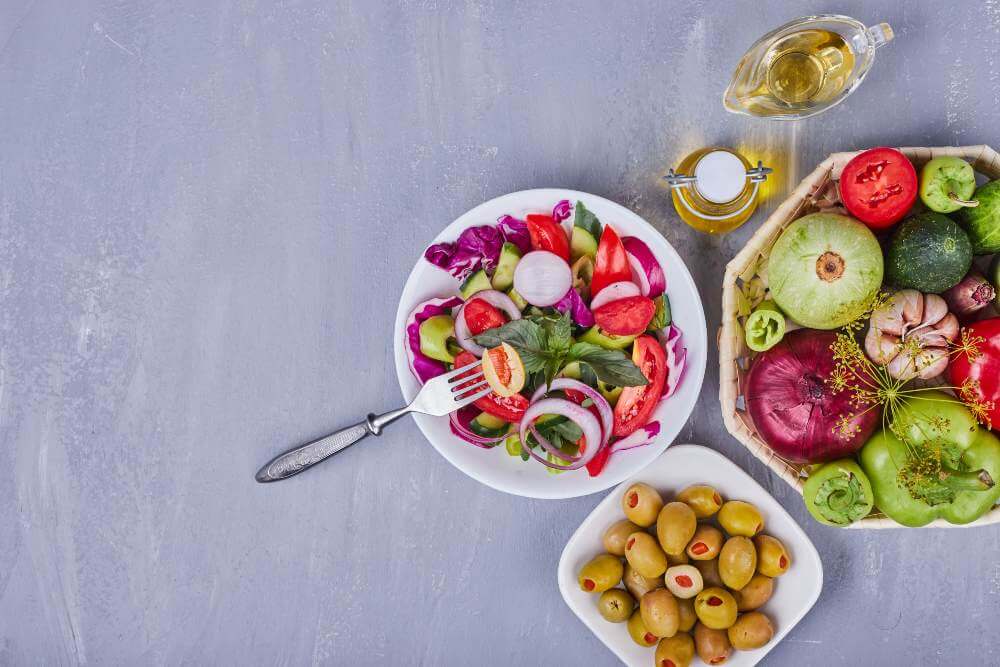
Sample of a Mediterranean Diet Meal Plan – 7 days
Here’s our example of a 7-day Mediterranean diet meal plan. It’s healthy and balanced, without many restrictions, so we believe you won’t have a problem getting used to eating like this every day.
Day 1
Breakfast
Greek yogurt with fresh berries, a drizzle of honey, and a handful of walnuts, served with a slice of whole-grain bread and olive oil.
Mid-morning snack
An apple or a pear with a few almonds.
Lunch
Grilled salmon with a large salad (tomatoes, cucumbers, arugula, red onion, olives…). Use extra-virgin olive oil and lemon as a salad dressing and serve a small portion of quinoa or whole-grain bread with it.
Afternoon snack
Hummus with carrot or cucumber sticks.
Dinner
Roasted vegetables (for example, zucchini, eggplant, and bell peppers) with a side of chickpeas or lentils.
Day 2
Breakfast
Oatmeal cooked with water or almond milk, topped with grated apple, cinnamon, and a handful of walnuts. You can prepare it the evening before for it to be even tastier.
Mid-morning snack
A handful of grapes or cherries.
Lunch
Whole-grain pasta with tomato sauce, garlic, olive oil, basil, and sautéed zucchini.
Afternoon snack
Greek yogurt with a spoon of ground flaxseeds.
Dinner
Chickpea and vegetable stew (carrots, celery, onions, spinach) with a slice of whole-grain bread.
Day 3
Breakfast
Whole-grain toast with mashed avocado, olive oil, and a boiled egg.
Mid-morning snack
An orange or mandarin.
Lunch
Grilled trout with Swiss chard and boiled potatoes drizzled with olive oil and lemon.
Afternoon snack
A handful of almonds.
Dinner
Simple tomato and cucumber salad with olives and feta cheese.
Day 4
Breakfast
Greek yogurt with strawberries, chia seeds, and a drizzle of honey.
Mid-morning snack
Wild berry protein shake.
Lunch
Quinoa salad with roasted bell peppers, eggplant, red onion, parsley, and olive oil.
Afternoon snack
Hummus with celery sticks.
Dinner
Vegetable omelet (spinach, mushrooms, onions) with mixed green salad.
Day 5
Breakfast
Whole-grain bread with cottage cheese, tomatoes, and olive oil.
Mid-morning snack
A banana.
Lunch
Grilled chicken breast with bulgur, steamed broccoli, and carrots as a side dish. This dish is perfect as a post-workout meal.
Afternoon snack
A handful of hazelnuts.
Dinner
Roasted pumpkin and lentil salad with arugula and lemon-olive oil dressing.
Day 6
Breakfast
Overnight oats with blueberries and pumpkin seeds.
Mid-morning snack
An apple.
Lunch
Shrimp sautéed with garlic and olive oil, served with brown rice and green beans. This is a great meal filled with protein.
Afternoon snack
Greek yogurt with honey.
Dinner
Mixed vegetable soup (leeks, carrots, celery, potatoes) with whole-grain bread.
Day 7
Breakfast
Omelet with tomatoes, onions, and herbs, served with whole-grain toast.
Mid-morning snack
Fresh figs or seasonal fruit.
Lunch
Lentil salad with cucumbers, red onion, parsley, olive oil, and lemon.
Afternoon snack
A handful of pistachios.
Dinner
Grilled vegetables (zucchini, eggplant, peppers) with feta cheese and olives.
So, how do you like the idea of trying a Mediterranean diet? Let us know, and keep reading Real Fit blogs for a fresh dose of health and fitness advice.